
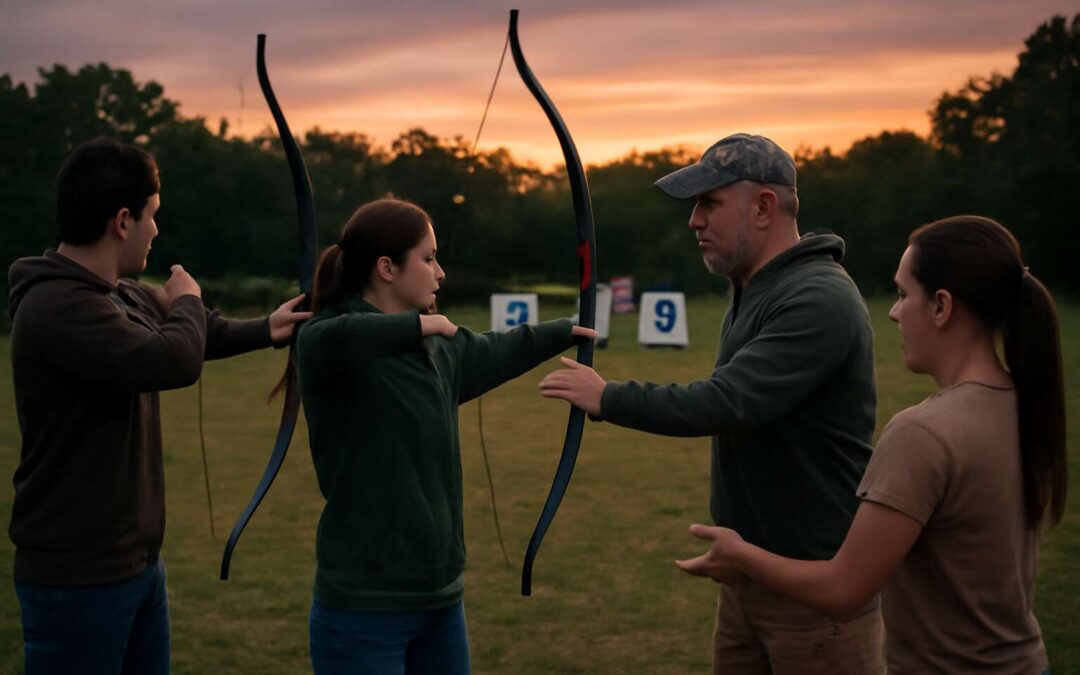
Foundations of Bowhunting Education
What a bowhunting education program covers and who should enroll
South Africa’s wilderness teaches patience, not bravado. The bow hunting education course shapes more than aim—it reshapes responsibility. Across South Africa, graduates report about a 30% reduction in avoidable errors.
Foundations are built on quiet observation, precise safety, and reverence for life. Learners discover how wind, light, and distance test judgment as much as muscle.
- Safety protocols and range discipline
- Equipment handling and maintenance
- Legal ethics, seasons, and wildlife welfare
The program maps core competencies and practical drills, from target acquisition to draw-length awareness. Theory meets hands-on practice in controlled settings, preparing students for real field conditions.
Who should enroll? Beginners seeking safe, responsible skills; seasoned archers seeking refinement; guides working in game reserves.
Safety as the cornerstone: gear handling, range rules, and ethics
South Africa’s archery fields prove it: patience outperforms bravado every time! Across our communities, graduates report about a 30% reduction in avoidable errors, a statistic that makes one thing unmistakable: safety is the cornerstone of every serious bow hunter. In this bow hunting education course, foundations begin with discipline and situational awareness.
Foundations hinge on three core pillars:
- Gear handling and maintenance
- Range rules and discipline
- Ethics and wildlife welfare
These pillars translate into drills—from safe draw length awareness to precise follow-through—turning safety into habit. For South African learners, the result is not mere technique but a mindset: respect for life, mastery of tools, and calm under pressure.
Legal landscape: permits, seasons, and licensing requirements
South Africa’s legal landscape for bow hunting is more than a set of rules; it’s a framework that shapes practice from the field to the classroom. In the bow hunting education course, learners map out permits, seasons, and licensing requirements that vary by province and game species. This legal literacy reduces uncertainty and keeps hunts compliant.
These elements are not abstract; they define how a hunt is planned, recorded, and reviewed. The following are common touchpoints within the South African context:
- Permits and permissions: registration with local authorities and any game-specific authorisations.
- Seasons and bag limits: knowing when you may pursue, what you may take, and how seasonal restrictions are enforced.
- Licensing requirements: hunter education certificates or licensing where applicable, plus compliance with wildlife acts.
- Transport and possession: rules for carrying bows, arrows, and related equipment to and from hunting sites.
Course formats: online, in-person, and hybrid options
“Better aim comes from better understanding,” a mentor once said as dawn broke over the veld, and the sentiment still echoes in our classrooms.
Foundations of bow hunting education course formats include online, in-person, and hybrid options that fit diverse learners across South Africa.
- Online: flexible modules you can complete from farm homesteads to remote towns.
- In-person: hands-on range sessions, safety drills, and on-site mentorship.
- Hybrid: a measured blend of digital theory and scheduled field practice to suit busy seasons.
These formats invite responsible hunters to grow at their own pace, granting access to hands-on skills without sacrificing the rhythms of rural life.
Curriculum Deep Dive: Core Topics
Equipment basics: bow setup, maintenance, and tuning
A tight bow is a quiet edge; proper equipment basics transform uncertainty into precision in the field. In the bow hunting education course, students explore bow setup, maintenance, and tuning as a cohesive skill set. “Maintenance is safety and consistency,” one veteran instructor says, and the point lands hard when the season starts.
Core topics include alignment checks, string care, and cam timing.
- Bow setup essentials: sight alignment, arrow clearance, and brace height
- Maintenance basics: strings, cables, wax schedules, and hardware checks
- Tuning checks: bareshaft flight, nocking points, and broadhead alignment
This bow hunting education course keeps the learner grounded in real-world setup while respecting local regulations and terrain across South Africa. Practical, hands-on instruction builds readiness for the field.
Fundamentals of marksmanship: stance, draw, anchor, and follow-through
A veldside stat: 83% of improved precision comes from a stable stance and a clean anchor. This is the heartbeat of the Curriculum Deep Dive: Core Topics—Fundamentals of marksmanship, in our bow hunting education course, where the science of marksmanship is taught with salt-and-pepper humor and field-tested practicality. In South Africa’s diverse ranges, solid fundamentals translate to real results.
The core topics are laid out as a quartet of steps, each building on the last:
- Stance
- Draw
- Anchor
- Follow-through
With this structure, learners stay grounded in real-world setup while navigating South Africa’s terrain and regulations. It’s the edge you bring to every stalk.
Shot placement, yardage estimation, and trajectory planning
In the veld of South Africa, precision isn’t luck—it’s math you can feel. The bow hunting education course presents a Curriculum Deep Dive into Core Topics that centers on shot placement, yardage estimation, and trajectory planning as the triad turning aim into ethical harvest.
Learn how anatomy informs where to aim, how to judge distance across varied terrain, and how to predict the arrow’s arc under gravity and wind. Practice scales and field drills that translate classroom theory into real-world stalks, a wind-writ map guiding your stride across riverine thickets and savannah flats.
- Shot placement strategies aligned with vital zones
- Yardage estimation techniques using rangefinding and pacing
- Trajectory planning that factors arrow speed and wind
Hands-On Training and Assessment
Range drills and safety protocols
In a bow hunting education course, hands-on training is where nerves settle into focus. On the range, theory becomes practice and safety becomes second nature, crafting steady shooters who respect the weapon and the wild they pursue. These assessment range drills gauge precision, timing, and judgment under controlled conditions, while keeping a reverent eye on ethics and responsibility.
Within the program, you’ll encounter structured drills that reinforce safeguards and grace—without surrendering challenge.
- Safety check procedures and proper use of protective gear
- Draw, anchor, and posture consistency in controlled settings
- Target engagement, range discipline, and clean release checks
This bow hunting education course turns practice into purpose, and every lesson rings with the promise of responsible pursuit.
Field exercises: tree stand, still-hunt, and stalking safety
“The forest tests your resolve before your aim tests your arrow,” a seasoned mentor once said, and I felt that. In the bow hunting education course, hands-on training turns nerves into steady focus. We dive into the practical rhythm of pursuit, where body, breath, and ethics align under a calm sky!
- Tree stand discipline and situational awareness
- Still-hunt realism, wind awareness, silhouette management
- Stalking safety, ethical pursuit, and retreat options
These field exercises sharpen judgment, respect for the animal, and a humility that guards every step in South Africa’s wilds. Practise becomes purpose, and the trees become mentors rather than obstacles.
Practical exams and certification requirements
Discipline meets precision in the hands-on trenches of the bow hunting education course. Hands-on training turns nerves into steady focus, shaping breath, stance, and ethics into a reliable rhythm beneath an expansive South African sky. Each drill attunes judgment to the heartbeat of the moment, where patience outvalues impulse and the hunter moves with quiet purpose!
Assessment blends theory with live scenarios, observed by seasoned mentors who prize safety, respect for the quarry, and accountable decision-making. Certification requirements ensure the credential stands up to scrutiny: a clean record of classroom mastery, practical proficiency, and ethical conduct. The bow hunting education course culminates in a formal examination that opens doors to responsible participation in South Africa’s wild places.
- Complete all modules and pass the knowledge assessment.
- Demonstrate practical competence through staged evaluations.
- Pass safety and ethics reviews with declarations.
- Receive the official bow hunting education course certificate.
Simulator and live-fire practice options
“Aim small, miss small.” That line anchors this bow hunting education course. In hands-on training, students use an Assessment Simulator that recreates field conditions—from reflective bushveld to shifting light—turning nerves into steady focus and turning breath, stance, and follow-through into a practiced rhythm. We see the calm come fast.
When conditions permit, live-fire practice options let students apply precision under controlled safety, building muscle memory at realistic yardages and with ethically managed targets.
- Assessment Simulator sessions that mimic wind shifts, lighting changes, and quarry noise
- Live-fire practice with calibrated targets, spotters, and safety observers
Mentors observe technique, monitor safety gear, and assess decision-making in dynamic scenarios, ensuring the bow hunting education course remains grounded in responsibility and skill.
Instructors’ feedback and coaching methods
In the bow hunting education course, the room-light flips to field-scout calm as mentors become scrutineers of detail. A telling stat: learners who receive targeted feedback improve 40% faster than those who train in silence.
Hands-on training hinges on nuanced coaching rather than loud bravado. Instructors observe from shoulder height, note breathing, stance, draw arc, and follow-through, then translate observation into precise cues aimed at converting nerves into steady rhythm. Debriefs are bite-sized, specific, and sometimes sarcastically uplifting—because South Africa’s veld demands clarity and heart.
- Immediate feedback paired with deliberate practice
- Video-based reviews to anchor cues to motion
- Progress-focused coaching tailored to the learner’s pace
- Safety-first decision-making with ethical underpinnings
The result? A culture of coaching that respects safety, skill, and a splash of wit, all wrapped into a bow hunting education course.
Planning Your Education Path and Beyond
Choosing course format, schedule, and location
Planning your education path feels like charting a dawn-lit river across South Africa’s vast plains: you set a direction, then let skill and patience carve the current. A thoughtful bow hunting education course begins by aligning your aspirations with practical steps, weaving safety, practice, and progression into one shimmering itinerary. I’ve seen journeys bloom when learners map gaps, set milestones, and trust the cadence of their own pace.
Beyond choosing course format, schedule, and location, consider these touchstones:
- Flexible time rhythm that fits work, family, and hunting season commitments
- Accessibility and travel logistics, including weekend options and nearby lodges
- Clear progression milestones and how certification timelines align with your personal goals
With that compass in hand, your learning becomes a living map—bright, patient, and truly yours!
Cost, scholarships, and return on investment
Plans born in dawn’s pale light become routes across South Africa’s veld. The bow hunting education course is a compass, not a cage, weaving aspiration with practical steps, safety with practice, and progression into one lucid itinerary. ‘Every true hunter plans,’ a seasoned mentor likes to say, and that plan keeps pace with the wind, guiding you toward measured growth rather than reckless bravado.
Beyond cost, scholarships and the return on investment quietly shape the journey. When tuition eases, confidence rises, licensing timelines align, and safer outings follow. I’ve seen learners seize opportunities when a scholarship aligns with their goals. Consider these supports:
- Scholarships from clubs or associations
- Grants or bursaries for rural education
- Employer sponsorship or flexible payment plans
In the end, the rewards of the bow hunting education course are measured in safer outings, steadier hands, and a deeply earned patience.
Career and recreational benefits: licensing, mentorship, and gear discounts
A crisp compass helps you navigate the veld of learning: recent data shows that learners who map their education path finish certifications 20% sooner than those who improvise. The bow hunting education course becomes a conduit, not a constraint, turning targets into a measured journey across safety, skill, and the thrill of the hunt.
Planning your education path means mapping milestones, choosing pacing, and weaving practice into your week. It’s about balancing theory with hands-on drills, aligning licensing timelines, and building a mentorship ladder that keeps you honest and hungry.
- Licensing readiness and permit timing
- Mentorship access and coaching cadence
- Gear discounts and trusted supplier networks
Beyond the horizon of licensure, the journey yields rewards that echo in the field: confidence, safer outings, and a community that values patience. The path offers discipline, respect for the landscape, and a lifelong appetite for growth.