Essential Gear for Bowhunting Turkeys
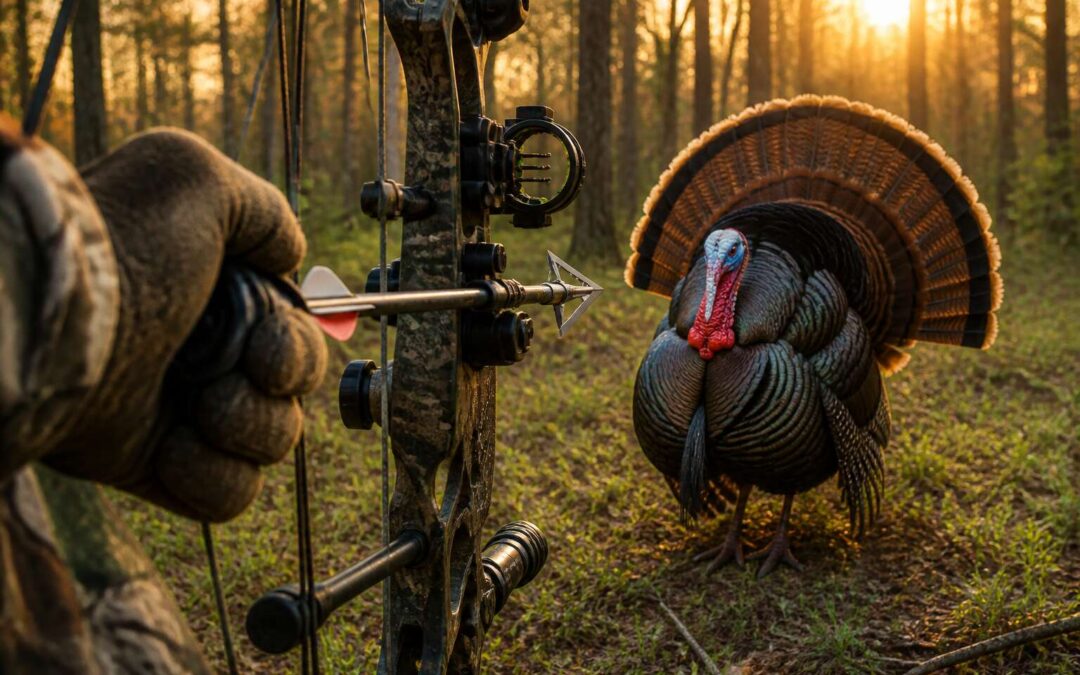
Turkeys are clever, and their eyesight is legendary. They see color and movement with a precision that feels supernatural, so your approach to bow hunting a turkey must be built on concealment. Your first layer of defense is a full camouflage suit that covers every inch of skin, including your face and hands. The second is your setup, a ground blind or a natural hide that breaks up your silhouette. Getting static before dawn is often the only way to beat their vigilance.
Inside your setup, organization is key. You want every item within arm’s reach and silent to access. Here is a core kit that works well in the South African bushveld:
1. A turkey decoy to pull a curious tom into range.
2. A slate or box call to produce soft, realistic yelps.
3. A shooting stick or tripod for a stable, precise shot.
Your bow must be tuned, but the arrow’s broadhead is the true workhorse. A sharp, fixed-blade head offers dependable penetration. When that longbeard finally steps into your lane, focus on the spot where the wing meets the body. The patience you exercise while bow hunting a turkey is a test of nerves, but the reward is a hard-earned trophy. Keep your movements slow and your shot placement perfect.
Scouting Turkeys: Patterns and Behavior
Ninety percent of turkey scouting is shedding assumptions before you ever set foot in the bush. You must become a student of their daily rhythm, that quiet, deliberate movement from roost to feeding zone. Success in bow hunting a turkey hinges on understanding this predictability, not on luck. Observe where their tracks cluster, then trace their path back to the tall trees they use as a fortress for the night.
The flock’s internal dialogue is your most reliable map. Their calls, a sharp putt or the softer cluck, reveal both their location and their mood. Listen for the sound of their feet shuffling through dry leaves, a continuous rustle that marks their travel corridor.
– Note the timing of their move to open fields, usually within the first hour of legal light.
– Identify the specific trees where they roost, as they will return to these repeatedly.
– Watch for dust baths in loose soil, a sign they feel secure in that area.
This knowledge transforms your position from a hopeful observer into an informed participant in their world.

Mastering Turkey Calling
The forest is quiet. Your first yelp cuts through the stillness, trembling and thin. A tom answers, his deep thump rolling across the clearing. This is the true test of bow hunting a turkey, where sound dictates the next minute of your life.
Calling requires more than mimicry. It demands attention to the bird’s cadence and pitch. Soft clucks tell you he is close. Aggressive cutts tell you he is searching. You speak with your call, but you listen with your whole body.
Patience is the most difficult part of this hunt, I have found. A louder call does not solve a stubborn bird. The tom decides when to commit. You control your position, your draw, your release. You wait for the moment he steps into your lane.