
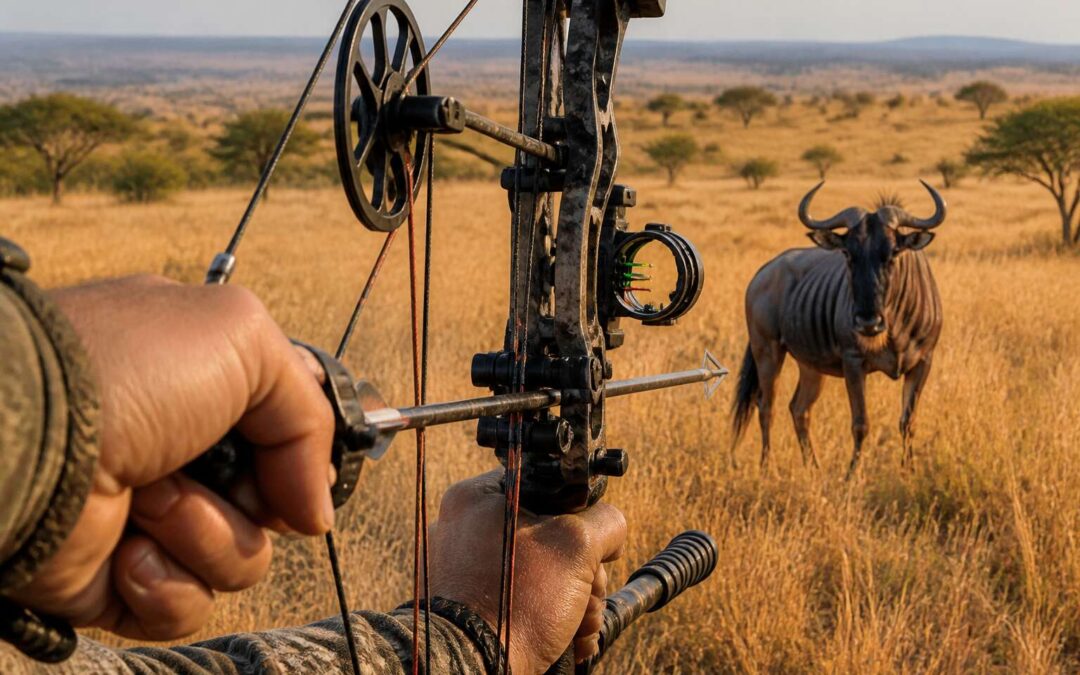
Blue Wildebeest Biology and Behavior
Physical Characteristics and Vital Stats
Blue wildebeest, or the brindled gnu, are deceptively robust antelope. A mature bull can tip the scales at 250 kilograms and stand 1.5 meters at the shoulder. Their dark grey coats, punctuated by black vertical stripes, make them unmistakable in the bushveld. The humped shoulders and broad muzzle lend a bovine look, yet they posess surprising speed and agility.
For bow hunting blue wildebeest, understanding herd structure is vital. Cows and calves moove in large groups, but old bulls often become territorial and solitary. Their senses are acute. They trust sight and smell to detect danger, and a distintive alarm snort can send the entire herd stampeding.
Vital stats for the field:
– Shoulder height: 1.3 to 1.5 meters
– Body mass: 180 to 250 kilograms
– Life span: up to 20 years
– Top speed: 50 to 60 km/h
This knowlege shapes how you approach and where you place your shot.
Habitat Preferences Across the African Savanna
During the dry season, blue wildebeest rarely venture more than five kilometers from water. They drink daily, so permanent water anchors their range. Dense woodland rarely holds them; they prefer sightlines across open grassland and mopane veld.
For bow hunting blue wildebeest, behavior matters as much as terrain. Breeding herds follow a matriarchal structure, while mature bulls claim rutting territories along the migration paths. A lone bull near a waterhole often stands sentinel, alert and suspicious.
Across South Africa’s savanna, these habitats hold wildebeest:
- Open grassland with scattered thorn trees
- Acacia savanna and mopane edges
- Permanent water sources within daily reach
These habitat patterns shape the approach from your first vantage point to your final position.
Herd Dynamics and Seasonal Movement Patterns
Each year, blue wildebeest herds shift their ranges with startling precision, sometimes moving dozens of kilometers in a single week. The matriarch leads, remembering routes learned from her mother. Young bulls trail behind, engaging in half-hearted sparring matches that settle tomorrow’s hierarchy.
Seasonal movement follows rainfall. Fresh grazing pulls herds across the veld. When the first storms break, family groups merge into larger congregations, traveling single file along pathways worn by generations. These aggregations break apart just as quickly when the grass thins, scattering into smaller units that are far more alert.
This restlessness shapes bow hunting blue wildebeest. A herd on the move is easier to pattern but harder to stalk. They stop to graze for only minutes before drifting onward. The old cows set the pace, and the bulls hold the edges, scanning the grass line for threats.
Senses and Instincts That Drive Wildebeest Survival
Blue wildebeest rely on senses honed by predation. Their eyes sit high on the skull, offering a near panoramic view of the grass line. A flick of an ear or a lifted nostril signals unease long before a hunter is in range.
When a herd detects a threat, the response is swift and communal. A snort, a stiff tail, and the entire group surges forward. This collective alarm makes bow hunting blue wildebeest a test of patience and precision.
- Hearing: They catch the snap of a twig at fifty paces.
- Smell: Wind shifts carry human scent.
- Sight: Movement triggers instant flight.
These instincts are not flaws. They are survival. The hunter who respects them works the wind and moves slow.
Bow Setup and Arrows for Heavy Game
Choosing a Draw Weight That Wins the Penetration Battle
A blue wildebeest’s shoulder blade is essentially Kevlar with horns. It will stop arrows that would flatten a deer. This is the first and most brutal lesson in bow hunting blue wildebeest. Your compound is not a speed machine here, it is a penetration tool. You need to win the battle before you even draw the string back.
Choosing a draw weight that wins the penetration battle is a matter of physics and ego. Forget the flat trajectory of lighter set-ups. You need momentum. A 70-pound draw weight is the absolute floor, and 75 to 80 pounds is a far more comfortable starting point. Heavier arrows, in the 650 to 750 grain range, convert that poundage into the kinetic energy required to smash through hide, muscle, and bone.
Your arrow shaft and broadhead must be built to survive. Do not use a hunting arrow with a thin wall construction. You want a shaft with maximum wall thickness, like a standard heavy shaft, and a single-bevel broadhead with a solid steel ferrule.
– Draw Weight: 70 lbs minimum; 75+ lbs recommended.
– Arrow Weight: 650 to 750 grains total.
– Broadhead: Single-bevel, cut-on-contact.
The flight of the arrow will be a rainbow, not a laser beam. That is a fact. You are exchanging speed for sheer, destructive momentum. This is the correct trade. The wildebeest does not care how fast the arrow flies, only how deep it goes. A slower, heavier arrow that breaks the near shoulder and reaches the vitals is worth far more than a hypersonic splinter that stops at the skin.
Best Broadheads for Tough-Hided Blue Wildebeest
The bow becomes a grim tool for a grim purpose. When I prepare for bow hunting blue wildebeest, precision is not optional. The cams must deliver a smooth draw, not a jarring snap, because a flinch at full draw is a fatal mistake. The rest needs to be a solid capture, holding the heavy shaft through the violent release. I tune my bow with the arrow in mind, not the chronograph.
My demands for the arrow are few but absolute:
- Maximum wall thickness to resist the crushing force of bone.
- Perfect spine match for the heavy head, ensuring consistent flight.
- Mechanical broadhead accuracy at every distance.
Broadheads for this beast are a study in edge geometry. The resilient hide demands a blade that shears rather than crushes. A single-bevel design rotates through tissue and bone, wrenching a path where a two-blade might deflect. I have yet to find a better choice for bow hunting blue wildebeest than a solid steel ferrule with a shaving sharp edge. There is no room for a razor that folds on impact.
Arrow Selection and Optimal FOC for Deep Tissue Damage
The draw length and anchor point become your only companions in the quiet before the shot. A consistent anchor, repeated thousands of times, builds the muscle memory that serves you when a bull stares from thirty yards. Bow hunting blue wildebeest demands a setup that disappears into your subconscious, leaving only the sight pin and the target.
Here is the truth about arrows for heavy game: they are the connection between intent and impact. A flimsy shaft will betray you the moment it meets resistance. I prefer a heavy arrow, one that carries momentum like a freight train. My current arrows weigh in at 650 grains, which is not a suggestion but a necessity for this quarry.
The components of my setup create a balanced system:
– A 31 inch arrow shaft with a thick wall construction
– A 125 grain single bevel broadhead
– A four inch fletch with a helical offset
– A nock that locks onto the string with zero play
FOC, or front of center, determines how the arrow behaves in flight and on impact. Optimal FOC for deep tissue damage sits around 18 percent, which means the balance point rides far forward. This forward weight drives the broadhead through hide, muscle, and bone. The arrow does not deflect, it plows. Bow hunting blue wildebeest tests this configuration every time the blade meets the shoulder blade. A higher FOC also steadies the arrow in crosswinds, keeping the flight true over thirty yards.
Broken Arrows and Recovery: Gear Redundancy in the Bush
Nothing ruins a perfect stalk like the sound of a carbon shaft snapping against a branch. In the bush, gear failure is not a matter of if, but when. For bow hunting blue wildebeest, I carry a backup arrow nocked and ready, but I also carry a small repair kit. That kit is the difference between a long walk and a longer story.
My redundancy list is short but non-negotiable:
- A spare D-loop and serving thread
- An extra release aid
- A multi-tool with a broadhead wrench
- Two field points for practice after the hunt
The wildebeest does not care about your setup. It cares about the arrow that arrives. When the bush eats one shaft, the next one must fly true. Bow hunting blue wildebeest punishes the unprepared. Recovery starts with not having to quit.
Practice Drills to Simulate Long-Range Bowhunting Shots
Sixty metres is a range that most setups can reach, but the distance needs a proven arrow. For bow hunting blue wildebeest, the herd rarely holds a straight line, and the opportunity opens and closes in one breath. The practice strip must be even more unforgiving than the field.
I use the exact same arrow in practice as in the hunt, with the same broadhead and the same FOC. A foam block with a vitals marker is the target. The stakes sit at forty, fifty and sixty metres. The stance changes with each shot: a kneel, a half-step, a slight lean off a tree trunk.
- One shot at forty metres with a calm breath.
- One shot at fifty metres after a short walk.
- One shot at sixty metres when the wind changes.
Two repeated groups inside the vitals close the drill. That repeated arrow flight is the only truth that matters in the field.
Scouting and Locating Blue Wildebeest
Reading Water Sources, Grazing Paths, and Rutting Grounds
Water dictates everything when you scout blue wildebeest. On the savanna, these animals drink at predictable times, usually mid-morning and late afternoon. I have watched a herd approach a pan with deliberate pauses, the lead cow testing the wind before committing. Reading those approach lines tells you exactly where to set up.
Grazing paths are another layer. Fresh dung and cropped grass mark the route, but the real signal is the direction of travel between water and shade. Follow those lines and you will find the main highways crossing the concession.
- Rutting grounds concentrate bulls in chaotic, noisy displays.
- Fighting scrapes and urine-soaked earth hold the strongest territorial males.
- Locate these zones days before your hunt begins.
For bow hunting blue wildebeest, returning to those same scouting locations after dark reveals new sign, and the rut recharges the area with fresh activity. That is the window you want.
Spot-and-Stalk Techniques for Open Terrain
Spot and stalk on open ground demands a different discipline. The blue wildebeest has an eye that catches movement at 400 metres, and the mirage over the pans distorts your outline. You must read the wind in three dimensions, because thermals shift as the sun climbs. I have crawled through acacia thorn and dried grass for an hour only to watch the herd shift 50 metres for no reason at all.
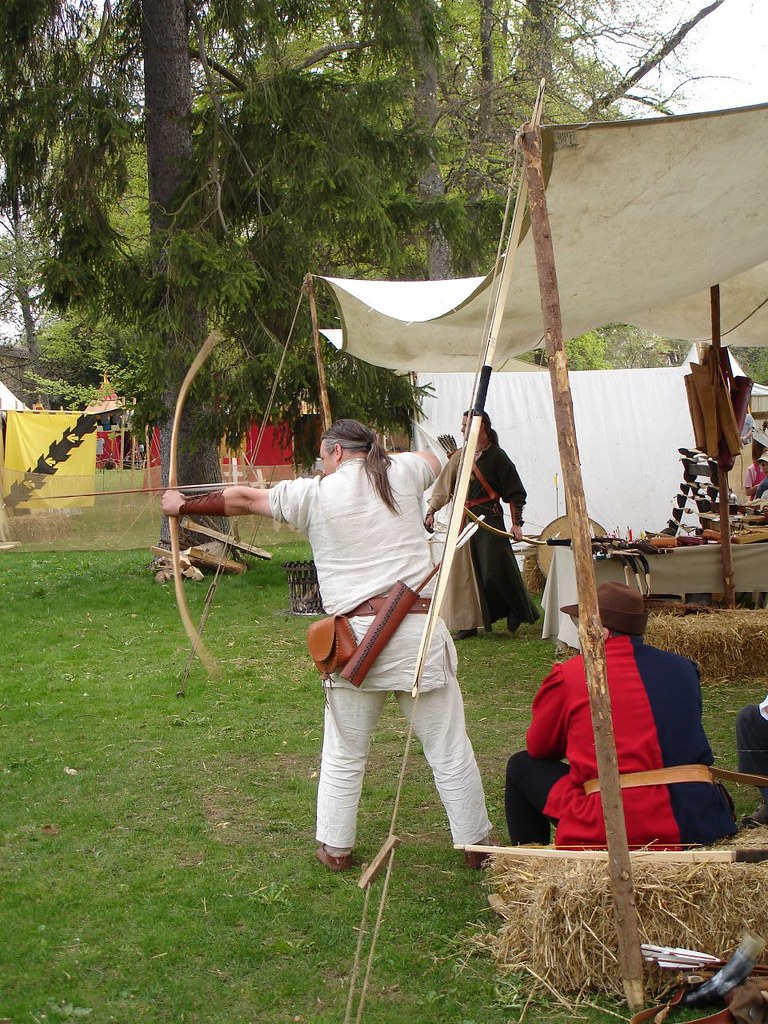
When you glass a herd from a ridge, pick the individual animal first, then plan your route. Use the terrain features that break your silhouette:
- Termite mounds and old aardvark diggings
- Dried watercourses with any bank cover
- Isolated scrub patches between you and the target
The stalk becomes a series of small commits. Each pause lets the animals settle. For bow hunting blue wildebeest, you want to close inside 40 metres, and that final approach is always on your stomach.
Using Wind and Thermals to Get Within Bow Range
Before first light, the air lies still and cold, and that is when the blue wildebeest move most predictably. I have watched them filter out of the mopane scrub toward the same grazing edge for three mornings running. The trick is not to follow the herd, but to set up where the thermal will carry your scent away from them. On the open savanna, thermals begin to rise as the sun touches the red dirt, and a stalk that worked at dawn becomes useless by mid-morning.
- Dust spiraling off a bare pan means the ground is already heating.
- Seed heads of tef grass bending in one direction while the treetops sway another way show a shear layer.
- Moisture on your boot leather tells you the air is still draining downhill.
When you locate a herd, drop to your knees and read the ground. A cool drainage line holds the morning air, and that will drag your scent downhill. Mark the downwind edge of the herd, then circle wide, using the thermal lift to mask your approach. For bow hunting blue wildebeest, patience with the wind matters more than the shot itself. You cannot force a stalk into a shifting breeze. You move only when the thermals allow it, and you stop the moment they stall.
When to Hunt: Seasonal Timing and Time-of-Day Patterns
No one stumbles onto a blue wildebeest herd by accident. Scouting for bow hunting blue wildebeest starts months before the hunt. Late winter and early spring force the herds to congregate around the remaining pans and troughs. The dry bush strips away their hiding places, and you can glass entire drainage lines without a single tree interrupting the view.
The best scouting windows mirror the hunting windows:
- First light, when herds move from bedding grounds to grazing edges.
- The final hour and a half of daylight, when they filter back toward water.
- Cold, overcast days, when wildebeest keep moving through midday.
The days after a late summer storm disrupt their schedule entirely. Fresh growth draws them to unexpected corners of the property, so plan to recon those areas within hours of the rain stopping.
Shot Placement and Ethical Harvest
Anatomy of a Blue Wildebeest: Locating the Vitals
Understanding the anatomy of a blue wildebeest is the key to a clean recovery. For bow hunting blue wildebeest, the primary target is the lungs, with the heart as a secondary option. The heart sits low in the chest, behind the heavy humerus bone. For an ethical kill, aim for this point. A broadside shot offers the best angle. Aim directly behind the shoulder, a third of the way up the torso.
Here are the notable aiming landmarks:
- The vertical crease where the front leg meets the body.
- The horizontal line from the elbow to the spine.
- The point just behind the shoulder blade when the leg is forward.
A shot too high hits the spine. A shot too low strikes the brisket. A shot too far forward deflects off the shoulder.
Best Shooting Angles for Broadside, Quartering, and Frontal Shots
Dawn creeps across the veld in amber and shadow. In bow hunting blue wildebeest, the angle of the shot shapes the outcome. Broadside is the most forgiving. The lungs sit low behind the shoulder, and the arrow takes the path of least resistance. Clean broadside hits drop many animals within forty metres. What a difference one step makes!
Quartering away opens a channel through the rear ribs into the opposite lung. The liver lies in the path, which makes this angle lethal but less predictable. I prefer it only when the animal is calm and unaware.
Frontal shots tempt the unwise. In bow hunting blue wildebeest, the humerus and sternum guard the vitals, and arrows that strike bone are turned aside. Such wounds end in long tracking jobs across the thornveld.
- Broadside: full lung exposure.
- Quartering away: deeper penetration, added risk.
- Frontal: bone in the way, little margin for error.
Common Shot Placement Errors and Their Consequences
An arrow that lands three centimetres too far forward in bow hunting blue wildebeest strikes the heavy scapula. The broadhead stops cold. The animal bolts with a wound that looks severe but bleeds slowly. Tracking becomes a test of patience across rocky ground.
A shot too far back pierces the rumen. Bacteria spill into the body cavity, and the blood trail fades to nothing within fifty metres. These errors share one root cause: impatience. Hunters rush the release when the animal fidgets, or they misread the shoulder line under low light. The consequence is a lost animal and a lingering regret. Ethical harvest demands a clear sight picture of the lungs and a steady hand until the arrow flies. In bow hunting blue wildebeest, precisión forgives nothing.
Post-Shot Protocol and Blood Trailing Strategies
I have learned that the real work in bow hunting blue wildebeest begins after the arrow connects. Your role shifts from hunter to tracker. Watch for a flinch, a tail tuck, or a stumble. Wait. Twenty minutes is the minimum!
Move to the impact site and read the ground before the blood. Bright red means a heart hit. Darker blood suggests the lungs. Greenish fluid means a paunch shot.
When trailing, mark every sign you find. The blood trail changes as the wildebeest moves. It may increase, decrease, or vanish. Slow when it thins:
- Mark the last sign with a snapped branch.
- Cast forward in a semicircle to pick up the trail.
- Return to the last sign, not your guess.
A disciplined tracker recovers animals that a hasty hunter loses. This defines ethical bow hunting blue wildebeest.
Understanding Follow-Up Shots on Wounded Bulls
The first arrow landing with a wet thump does not always end the encounter. A blue wildebeest bull can absorb a mortal wound and still stand, braced against the shock. Your ethical harvest requires a clear judgment: is a follow-up shot necessary? This is not about eagerness. Read the animal’s posture. If the bull’s head drops, if its front legs buckle, if it stumbles toward the herd, the vitals are compromised. A second arrow, tight behind the shoulder, ends the suffering.
Recovery guides your decision. The target remains the same: the low chest, above the elbow line. High or hasty shots create more trauma. Consider these factors before drawing:
- The bull is still standing, but its breathing is labored.
- The first arrow struck far back, indicating a liver or paunch hit.
- The animal is rejoining the group, obscuring your next angle.
In bow hunting blue wildebeest, follow-up shots demand the same discipline as the first. Re-anchor your form, settle the pin, ignore the tremor in your arms. A calm second arrow separates a recovered bull from a lost one.
Field Care and Trophy Preservation in the Heat
Caping and Skinning for Precision Shoulder Mounts
The lowveld heat is merciless. When you take a bull through bow hunting blue wildebeest, the fight does not end at the shot. It shifts to the ground, where the sun works on hide and flesh. Hair slips within a couple of hours, and a ruined cape is a trophy lost forever.
Speed is not recklessness. Control the blade and follow the natural lines. For a precision shoulder mount, the process demands care:
- Cut around the full circumference of the body behind the shoulders.
- Separate the cape from the neck and brisket, leaving generous margins.
- Roll the hide flesh side inward and place it in the shade or a game bag.
The skinning shed comes later. Handle the hide as if it were the only record of the hunt, because in the African heat, it often is.
Cooling and Meat Handling in High Temperatures
The bull strikes the ground, and the lowveld heat already sits in the body cavity. In bow hunting blue wildebeest, the hours after the shot decide the quality of the meat. I move to the carcass quickly, opening the belly along the white line and pulling out the viscera before the internal warmth seeps into the muscle.
Once empty, I prop the ribs apart with a short stick. This lets the hot air rise out and the cooler evening air settle in. I drag the intact side toward the nearest shade from a rocky overhang, keeping the abdominal opening facing the dark. The back stays off the dirt, and the hind legs fold under the belly gap.
A soft linen cloth covers the opening, but no plastic ever touches the shaken body. The muscle must breathe, and the meat will cool at the pace the wind gives it. A careless pause adds twelve hours to the waiting table.
Packaging and Transporting Trophies for taxidermy
An hour in the lowveld sun can undo a perfect shot. In bow hunting blue wildebeest, the cape separates from the carcass before rigor sets in. I cut around the shoulders and down the back of the neck, leaving the full skin intact for the taxidermist. The knife stays against the flesh side, never slicing through to the hair.
Salt reaches the dermis within minutes. I rub it into every fold, then lay the cape flesh over flesh to draw out moisture. The horns wrap separately in damp burlap so the sheaths stay supple.
Packaging matters in this heat. A breathable sack beats plastic sheeting every time. I keep the trophy away from the spare wheel and the exhaust, because a sour cape turns the finest shoulder mount into a bin job. The skull cap gets the same treatment: stripped clean, salted, and aired until the taxidermist takes over.
Scoring Critera for Records Books and Safari Club Entry
For bow hunting blue wildebeest, field care in the heat decides whether a bull earns its place in the records books. Safari Club International measures blue wildebeest by horn length and base circumference, and a dehydrated sheath loses millimetres by the hour. The lowveld sun does more damage than the broadhead ever could.
I keep the trophy shaded from the moment it drops. The skull cap stays intact until the taxidermist can assess it, because a cracked horn base disqualifies an otherwise exceptional entry.
- Horn length measured along the outside curve
- Base circumference taken at the lowest point
- Both horns must remain undamaged for official scoring
Bow hunting blue wildebeest in this heat demands a system. The records book has no mercy for a cape left in the sun, and Safari Club entry requires a trophy that survived the field, not just the shot.