
Types of Archery Bows
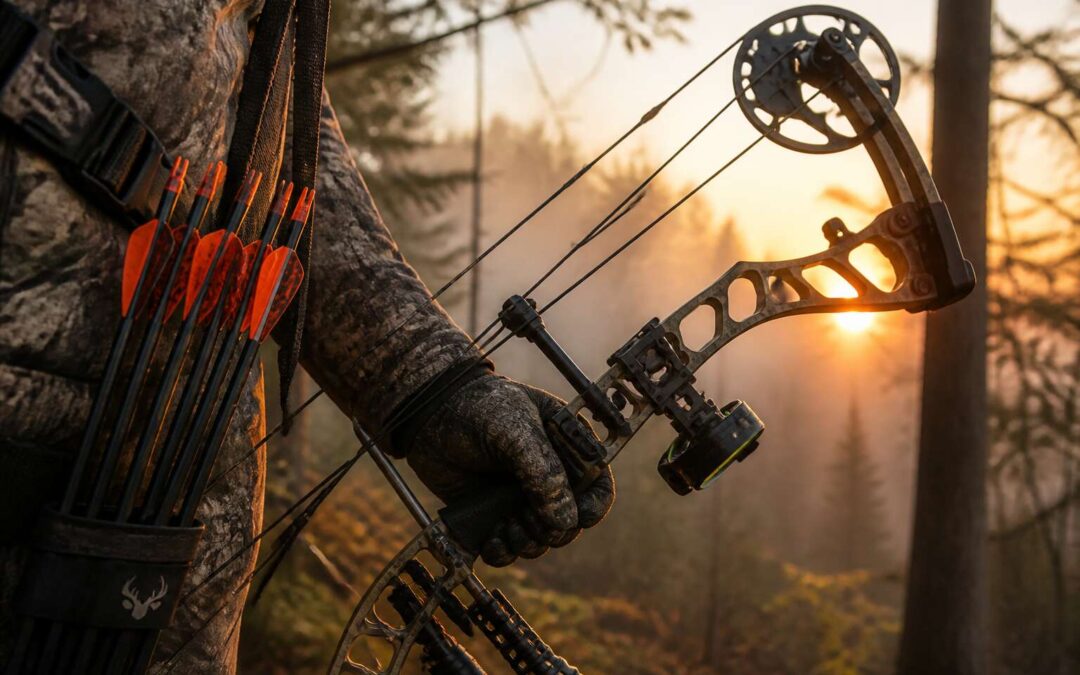
Compound Bows
Compound bows changed bow hunting bow design forever. The cam system stores energy differently than traditional recurves, offering a let-off that holds the weight back at full draw. A hunter can remain at full draw longer without fatiguing, one reason this bow hunting bow is favoured across South Africa.
- Cams or wheels that control the draw cycle
- Cables that transfer energy to the limbs
- A machined riser for stability
The mechanical advantage permits a shorter axle to axle length, which makes manoeuvring between trees easier. For the hunter stalking in thick cover, the compound delivers a calculated, repeatable release. Accuracy depends on tuning the bow hunting bow to the shooter’s draw length, a process that demands patience but rewards with tight groupings.
Recurve Bows
Recurve bows carry a quiet elegance that still turns heads in the African bush. Their distinctive curved limb tips store energy efficiently, yet there is no mechanical let-off. This bow hunting bow demands a steady hold and a clean release, rewarding archers who master its rhythm. I appreciate the simplicity, since fewer moving parts mean less can go wrong when humidity or dust tests your gear.
Common recurve features include:
– A single continuous piece or takedown design
– Limbs that curl away from the archer
– A smooth draw cycle from start to finish
For hunters tracking kudu or impala, this bow hunting bow offers a traditional challenge. The absence of cams reduces noise, and its lighter weight makes long walks more manageable.
Crossbows
The crossbow is a different breed of bow hunting bow, one that has quietly redefined what is possible in the African bush. Its horizontal limb assembly and mounted stock allow a hunter to hold a full draw for extended periods without the muscle fatigue of a vertical bow. This, I have found, changes everything about patience. When a wildebeest hesitates behind a thicket, you are not waiting for the right moment with a shaking arm; you are simply waiting.
Modern crossbows generate striking kinetic energy, and their trigger mechanisms offer a release that rivals any rifle in terms of precision. The learning curve for an archer transitioning from a compound or recurve is steep in theory, yet the core mechanics feel intuitive. You aim, you settle, you squeeze, and the bolt flies. It is remarkably efficient for the hunter who values certainty over tradition.
However, this efficiency is not without its own set of complexities. The weight of a loaded crossbow can be substantial, and the cocking action requires a consistent, smooth motion to avoid misalignment. I appreciate the mechanical advantage of a crank or rope aid, but it adds seconds to the process. The device also demands broadheads that match its bolt weight and profile to ensure proper flight. Getting this wrong results in frustrating arrow drift.
Consider the practical attributes that make this specific bow hunting bow a viable choice for local conditions.
– Compact power: A short axle-to-axle width makes maneuvering in blind setups more manageable.
– Flat trajectory: The velocity of a crossbow bolt reduces the need for exact range estimation.
– Quiet operation: A well-maintained crossbow produces a crisp thump rather than a snap.
There is a quiet controversy surrounding the crossbow, specifically whether it belongs in the same category as the traditional longbow. Yet in South Africa, where hunting conditions vary from dense bushveld to open plains, the crossbow serves a distinct purpose. It offers a stable platform for the hunter who seeks a ethical, clean kill without dedicating years to perfecting a vertical draw. The bow hunting bow landscape is wide, and the crossbow occupies its ground with unwavering authority.
Longbows
There is a peculiar honesty to the longbow, a bow hunting bow stripped of modern concession. It demands something you cannot name. The limb bends like a living branch, and the draw weight rests entirely on your back. No cams, no let-off, no forgiveness!
In South Africa’s thorny thickets, the longbow feels like an anachronism. The arrow travels slower, the sight picture becomes instinct. That limitation forces discipline. You learn to read a kudu’s shoulder muscles, feel the wind, release when your breath hangs still. It is not efficient. It is intimate.
A yew stave, carefully tillered, stores energy with a gentle arc. The arrow bends around the riser, and that flex requires a perfectly timed release. I have seen hunters miss the same impala twice because they rushed the draw. The longbow punishes haste.
Anatomy of a Modern Bow
Riser and Grip
The riser holds everything together on a bow hunting bow, yet most hunters ignore it until accuracy drops. I have watched shooters adjust their sights for hours while the real problem was a grip that twisted under pressure. A modern riser is machined from aluminium or magnesium, with precision pockets for the limbs and a shelf that guides your arrow. The grip is where your hand transfers intention to the bow’s mechanics.
Grip torque is the silent killer of precision. When you squeeze, the riser rotates slightly and your arrow drifts. A quality grip sits in the webbing of your hand, maintaining a low wrist profile that encourages a relaxed hold.
- Look for a contoured palm swell that matches your hand size.
- Confirm the riser’s balance point aligns with your index finger.
That balance matters most on a bow hunting bow during long stalks. A well paired riser and grip reduce fatigue and keep every shot repeatable.
Limbs and Limb Pockets
Limbs store and release the energy that drives every arrow from a bow hunting bow. Modern limbs use laminated fiberglass and carbon composites that flex consistently across temperature swings. A limb that performs at 25 degrees will behave the same at 35 degrees, which matters on a long South African stalk.
Limb pockets are the sockets that hold these limbs to the riser. They look simple, but their geometry controls how the limb loads. A misaligned pocket creates uneven stress, and the bow hunting bow will shoot erratically. Machined aluminum pockets with hardened inserts seat the limb butt firmly with no lateral play.
- Split limbs reduce torque and track straighter
- Pocket angle determines draw curve and hand shock
- Preloaded pockets increase stored energy
I have seen hunters blame their release aid when the real fault was a loose limb bolt! A quick check of the limb pocket bolts would have saved an afternoon of frustration.
String and Cables
Modern bow strings are braided from high-modulus polyethylene fibers, the same family of materials used in bulletproof vests. The serving, a sacrificial wrap around the central section, protects the string where it contacts the cable guard and your release aid. End loops are spliced, not tied, to maintain consistent stretch across each shot. For a bow hunting bow, this consistency matters when a kudu appears at forty paces.
The cables work in tandem with the string, synchronizing the cam rotation. Without them, the energy transfer becomes a staggered mess. Key components include:
- Center serving: the wear point that contacts the release
- Yoke: the split end that connects to the cam posts
- Cable slide: the low-friction bushing that rides the guard rod
I have watched hunters replace perfectly good strings on a bow hunting bow because they misread cable twist as stretch. A quick twist check would tell you the truth.
Cam System
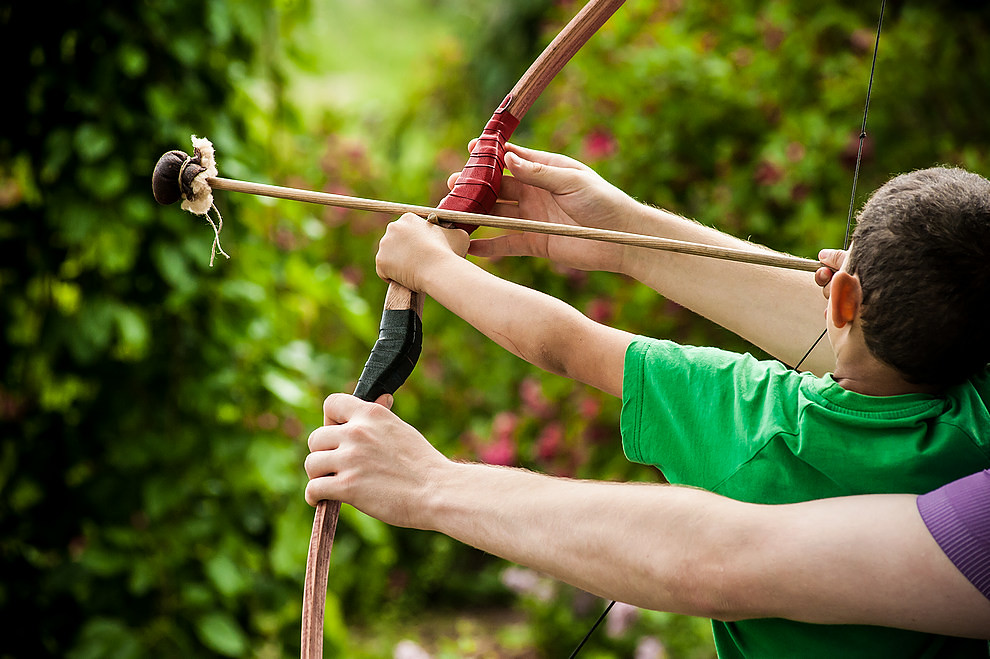
The cam system is the mechanical heart of a bow hunting bow, a set of eccentric wheels that dictate the entire draw cycle. Each cam profile is a calculated curve of energy storage and release, designed to hold immense power at full draw while offering a manageable let-off. This is where the bow converts your physical effort into lethal potential, a process that feels almost like a coiled spring under tension.
For the hunter, these lobes and modules control the critical timing of the shot. The modular systems allow for a specific adjustment of draw length and weight, ensuring the shooter sits in the most powerful and comfortable position. The axle and bearing assemblies must withstand incredible lateral force, as any play here translates to erratic arrow flight on a bow hunting bow.
The interaction between the top and bottom cam must be absolutely synchronous. A single misaligned rotation creates a nock travel that is anything but true. Key elements to inspect:
– Grip modules for fit and wear
– Limb stops for consistent back wall
– Timing marks on the cam core
In the low light of an African dawn, when the bush is silent, you depend on this precision. The abrupt stop of the limb against the stop sets a boundary you can trust. The cams have a personality, some aggressive and fast, others smooth and forgiving, but the right one becomes an extension of your nerve. They are the final arbiters of velocity and quiet, a complex piece of engineering that answers for the split second you take the shot. This is what separates a tool from a trusted companion in the veld.
Arrow Rest and Plunger
Beneath the shadow of the cam system lies the arrow rest, a quiet hinge between tension and release. The plunger, a spring loaded sentinel, absorbs the lateral sway of the shaft as it leaves the bow hunting bow. Here, the arrow’s spine meets the bow’s voice. A hard rest sends vibration into the fletching; a flexible cushion turns chaos into a straight breath.
Key elements to inspect:
- Vertical alignment of the launcher arm
- Plunger tension and spring response
- Clearance for broadhead blades
In the lowveld dusk, a misaligned rest can send a shot into the thorn. The plunger’s sweet spot is found by feel, not by gauge. The arrow’s departure must be a whisper, or the night knows you.
Bow Sight and Peep
The modern bow sight uses multiple pins for fixed ranges. Each pin corresponds to a distance, usually marked in meters or yards. The peep sight, a small ring inside the string, creates a consistent anchor point. When you draw, the peep aligns your eye with the front sight. This alignment is critical for accuracy.
For a bow hunting bow, the peep and sight work as one unit. A twisted peep can ruin an afternoon stalk.
- Check peep alignment at full draw
- Adjust pin brightness
- Confirm clearance for your eye relief
The aperture size changes light and focus. A larger peep helps in low light, but a smaller peep tightens your sight picture.
Choosing the Right Bow for You
Measuring Draw Length
Choosing a bow hunting bow without measuring your draw length is like buying a suit based on your shoe size. It ends in embarrassment and a lot of fabric snagging on branches. Your draw length dictates accuracy, comfort, and whether you can actually hold the bow steady past the first twenty minutes.
Here is the pragmatic method, not the one from your buddy’s cousin. Stand against a flat wall with your arms spread wide. Measure the distance between your fingertips, then divide that number by 2.5. That gives you your draw length in inches. Let that sink in, because it has nothing to do with how far you can stretch after a braai.
- Mark your fingertip measurements twice to avoid a math error.
- Divide by 2.5 and round to the nearest half inch.
- Repeat the measurement three times and take the average.
Once you have that number, match it to the bow’s cam settings or limb stops. A half inch of error on your bow hunting bow turns a confident shot into a tree ornament. The difference between 28 and 28.5 inches may not look like much on paper, but your shoulders will file a formal complaint after an hour in the veld.
Setting Draw Weight
Most hunters obsess over the cam system or the finish on the riser, but the true relationship with a bow hunting bow is forged in the draw weight. This is the force you must command on every single shot. Set it too heavy, and your form collapses, your pin dances, and you start flinching. Set it too light, and you lose the arrow speed needed for a clean ethical kill.
The right draw weight is a negotiation between your brute strength and your ability to maintain perfect posture. A good starting point is a weight you can draw smoothly, hold for a full ten seconds, and lower without shaking. If you are fighting the string, the bow is winning.
Choosing the right platform for this power is the next step. Your physical dimensions and hunting style should dictate the bow type. Consider these factors:
1. Your typical hunting distance; shorter shots allow for a more compact axle-to-axle length.
2. The terrain you hunt, whether it is tight bushveld or open Karoo plains.
3. Your tolerance for maintenance; some bows demand more attention than others.
4. The availability of local service and spare parts for that specific model.
Once you have found the bow, keep the draw weight manageable. You want the heaviest weight you can shoot accurately, not the heaviest you can lift. A bow hunting bow set at 60 pounds that you shoot perfectly is far more effective than one at 70 pounds that you cannot control. Respect the learning curve and the equipment will reward you.
Axle-to-Axle Length
The axle to axle length of your bow hunting bow determines how it behaves in your hands. A shorter bow, around 30 inches, swings easily in dense bushveld and fits into tight hides. But it demands more discipline at full draw. A longer bow, 34 inches or more, holds steadier and forgives small form errors. It suits open Karoo plains where shots are measured and deliberate.
Your hunting style should drive this choice:
1. Stalking through thick cover calls for a compact platform.
2. Sitting in a blind with limited window space favours a shorter bow.
3. Walking long distances with the bow in hand means every ounce matters.
4. Shooting from a standing position at longer range rewards stability.
The right bow hunting bow balances these pressures against your own build. Longer draw lengths pair naturally with longer axle to axle bows. Match the geometry to your body and the bow simply works with you.
Let-off and its Impact
An 80% let-off allows a 70-pound bow hunting bow to rest at just 14 pounds of resistance in your fingers. That number changes how you hunt. High let-off values let you sit at full draw while a kudu steps through the mopane. The cost is arrow speed. Lower let-off, around 65%, stores more energy in the limbs and pushes arrows faster, but your arms will burn during extended holds. The right bow hunting bow for the Karoo, where shots stretch out, might feel wrong in the bushveld thickets.
Hunters who shoot from a hide with a small window need time to aim:
- High let-off keeps the bow settled while you wait.
- Lower let-off suits quick snap shots in open terrain.
Match the let-off to your patience and the animal in front of you.
Test Shooting for Feel
A bow hunting bow from a catalogue is guesswork. The draw cycle feels smooth to one hunter and gritty to another. Your hand will tell you more than a spec sheet. Visit a shop with an indoor range and shoot everything they have. Feel the grip settle into your palm. Notice the balance at full draw. A bow hunting bow that looks light on paper can feel heavy after ten minutes.
Test with the accessories you plan to hunt with. A bare bow handles differently than one loaded with a sight and quiver. Bring your release aid. Use the arrows you intend to hunt with.
Compare models side by side:
- Shoot from a hide chair, standing, and kneeling.
- Note your wrist angle and how it affects alignment.
- Record vibration and noise, not just arrow speed.
The right bow repeats itself every time you raise it.
Hunting Environment Considerations
A bushveld hunter’s reality is almost the opposite of a Karoo plains hunter’s reality. Your bow hunting bow must function where you actually walk and sit. Heavy brush demands a compact design that won’t snag on thorns. Open fields allow for a longer axle-to-axle length, which provides a steadier hold for a long-range shot. Consider the likely shooting distance, the available light, and the spaces between trees or rocks.
The environment also dictates your gear setup, which changes how the bow feels. A quiet, damped bow hunting bow is critical in dry, crunchy conditions where sound travels far. Think about how the bow handles heat and dust. Sand and grit wear down moving parts faster than rain and mud do. Take time to evaluate the durability of the finish and the reliability of the hardware in the conditions you face daily.
– A bow that is easy to carry on a long walk
– A setup that allows for a quick shot from a blind
– A design that resists the wear of heavy brush
The interaction between your gear and the landscape is the final test. The best bow hunting bow for South Africa is one that feels like an extension of your body when you are kneeling in the tall grass or sitting perfectly still against a tree. It works with the wind, the dust, and the uneven ground. The rest of the world fades away, and you are simply present.
Bow Setup and Tuning
Installing Accessories
A bow hunting bow only becomes reliable after you tune each attachment. The arrow rest must sit level with the plunger, if you use one. The sight housing should follow the string’s vertical line. I have felt a quarter turn on a stabilizer change the whole draw.
Install accessories in the correct order. First the rest, then the sight, then the dampener and quiver. After each removal from the case, recheck torque. Wind vibrations loosen screws.
- Check the nocking point against the rest’s center
- Confirm the peep rotates naturally at full draw
Nothing ruins a hunt faster than a bow that resists its own movement. Take time before every season to confirm every bolt holds firm.
Aligning the Arrow Rest
A two millimetre error at the arrow rest translates to a miss at twenty paces. That is the reality for any bow hunting bow that leaves the shop without a proper centre shot alignment.
Aligning the rest means setting it level with the plunger or the riser’s vertical axis. I check three things before I trust the bow:
- The rest arm sits dead centre relative to the string’s plane.
- The mounting bracket torques to spec without shifting.
- The arrow’s nock height matches the rest’s vertical midpoint.
Once those hold, the bow shoots where you look! A quick walk back to fifteen metres exposes any remaining bias, and that is where you fine tune the rest’s lateral position.
Paper Tuning
A single sheet of paper exposed the flaw in my bow hunting bow that a dozen foam targets missed. The arrow punched through, leaving a tear that pointed right. That tear told me the rest was still off by a hair. Paper tuning is cheap, fast, and brutally honest.
Here is what I look for after the first shot:
- A clean, round hole with equal paper tears on all sides
- A tail tear pointing left or right, which indicates rest or cam timing issues
- A tear with the paper kicked upward or downward, meaning nock height is off
The paper does not lie, and it does not care how good you think you are. A bullet hole means your bow hunting bow is throwing arrows straight. That is the whole game.
Walk-back Tuning
Paper tuning tells you what happens at the moment of release. Walk-back tuning tells you what happens after the arrow leaves the string. You shoot one arrow at 20 meters, then 30, then 40, using the same pin and the same aim point. The arrows land where they land.
A bow hunting bow that throws a vertical line at every distance has its rest, nock, and cam timing in agreement. That is rare. More often, the group walks sideways as the distance grows. I look for three things:
- A straight vertical column means the arrow is leaving the string without lateral torque
- Leftward drift indicates the launcher arm is too stiff
- Rightward drift means the rest is too soft or the cams are out of sync
Walk-back tuning exposes the small errors that paper tears cannot show. Paper confirms the arrow flies straight. Walk-back confirms it stays straight when gravity and distance put the bow hunting bow under real pressure.
Cam Timing Adjustments
Cam timing is the last secret a bow hunting bow keeps. The cams must roll over in perfect unison. If one reaches the stop a fraction before the other, the bow hunting bow feels dead at full draw, and the arrow leaves with a sideways push that no rest adjustment can fix. Cam timing adjustments happen on the cable, not the limbs. I compare the timing marks on each cam at full draw. A one-millimeter difference changes the entire draw cycle. The warning signs are obvious:
- A flat, dead spot in the draw cycle
- A hard stop that lands unevenly from shot to shot
- Arrow impact that drifts horizontally as distance grows
Turning the cable yoke is delicate work. A cam that is half a millimeter off will show up at 40 meters even when paper tuning says the bow is perfect. Most hunters ignore these signs until the bow fails them on a stalk.
Broadhead Tuning
Broadhead tuning is where a bow hunting bow shows its nature. A field point hides a lot. A broadhead amplifies every flaw. The fixed blade cuts through air with authority, and if your arrow leaves with any lateral movement, the blade steers it off course. I have watched hunters chase a sight picture for days, when the real issue was the arrow’s launch angle.
- Arrow porpoising at 20 meters
- Broadhead planing to the right or left
- A consistent tear that paper tuning missed
You can have a perfect paper tear and still fail broadhead flight. The distance between field point and broadhead impact is a measure of forgiveness in your bow hunting bow setup. This is not a failure of the arrow. It comes down to rest, spine, and blade.
Maintaining Your Archery Equipment
String and Cable Care
A bow hunting bow relies entirely on its strings and cables. They bear the force of the draw and the shock of the release. In the South African bushveld, dust and heat accelerate their wear. I have seen a perfectly tuned bow lose accuracy simply because the servings frayed unnoticed.
Regular inspection of the string and cables is not optional. Look for broken strands, worn serving, and any signs of separation from the cam. Listen for creaks that signal dry friction. Apply wax lightly, but avoid excess, since over-waxing attracts grit that damages the fibers.
Sunlight degrades the material, and moisture invites rot. When you are not in the field, store your bow hunting bow in a cool, dry place. In the Karoo or the Lowveld, that means keeping it out of the bakkie’s boot on a hot day.
Lubrication Points
Metal on metal wears silently on a bow hunting bow. The cam axles and limb pivot points are the most ignored lubrication points in the field. In the dry South African heat, factory grease thickens and loses its purpose. A single drop of lightweight oil on each axle keeps the rotation smooth. The cable slide needs a thin coat of silicone grease. Ordinary lubricant can attack the cable material. A loose set screw on a cam is often the true source of a mysterious click.
The lubrication points follow a simple order:
- Cam axle bushings
- Limb pocket pivots
- Cable slide or roller guard
Skipping one creates uneven wear, and uneven wear on a bow hunting bow leads to inconsistent arrow flight.
Checking Limbs
The quietest part of a bow hunting bow is also the most deceptive. Limbs absorb the force of every shot, and they do so without complaint. A hairline crack can spread across the glass for months, audible in the way the bow changes tone long before it fails. I have seen bows in the Karoo with limbs that looked pristine until held at an angle against the sun. The light catches the fracture, a thin silver line running parallel to the grain.
The dry South African air does not soften the material; it hardens the surface, masking fatigue. Delamination starts between the layers, where the glue gives way and the limb begins to separate into thin, sharp flakes. A bow hunting bow with delaminated limbs is a hazard on the veld, not because it snaps loudly, but because it fails unexpectedly.
Storage and Transport
The heat inside a parked bakkie can exceed sixty degrees, a brutal test for any bow hunting bow. I have seen a seasoned hunter’s investment warp after a single afternoon sealed in a dark cabin. The materials do not melt, they simply lose their memory, the geometry shifting imperceptibly over time.
Proper storage is a ritual of respect. Keep the bow hunting bow in a climate controlled room, away from direct sunlight and the dusty breath of the Karoo wind. When travelling, never let the bow rattle free in the load bay.
– Always use a padded, hard-sided case for long trips.
– Secure the bow so the limbs do not twist against the interior.
– Never leave the bow cocked or under tension while stored.
The case becomes a sanctuary, a cool, dark space where the wood and composite can rest. A loosened bow hunting bow is a happy bow, ready for the next dawn stalk.
When to Replace Parts
Every bow hunting bow accumulates wear through use, and the first signs often appear in the string and arrow rest. A frayed strand near the loop demands attention. A soft click from the cam signals internal friction.
Replacement schedules depend on round count, not calendar time. Inspect the string every thirty shots. Check the launcher arm for scoring. When serving unwraps or a dampener cracks, act immediately.
- Replace the string when serving separates.
- Swap the rest when the launcher no longer sits flat.
A neglected bow becomes a liability. Replace parts before failure, not after.
Professional Inspection
What does a professional see that you ignore? A bow hunting bow accumulates silent failures. Your maintenance catches the loud ones. A technician catches the ones that wait.
During an inspection, an expert checks limb alignment under tension. They measure tiller balance with a caliper. They rotate each cam and listen for a gritty whisper. They check axle play. This scrutiny finds the truth before the bush does!
An ordered inspection follows a precise sequence:
- Examine the riser for hairline fractures.
- Verify limb pocket torque.
- Test cam rotation for uneven resistance.
- Measure string twist consistency.
I have accepted that my own eyes are insufficient. In South Africa, heat and dust accelerate wear. Professional inspection becomes a ritual. You owe the animal a clean release. You owe yourself an external verdict. A bow that survives an expert’s hands is one you can trust with your life.