
Choosing the Right Archery Gear
Compound vs. Recurve Bows for Deer
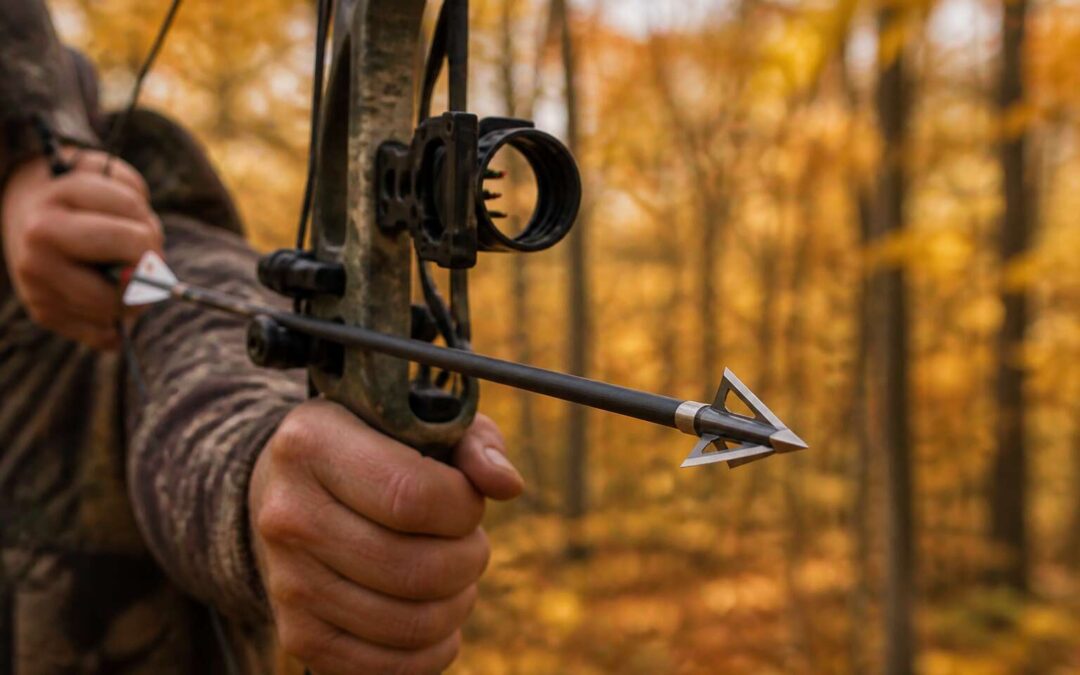
The distance between a clean kill and a wounded buck often comes down to your bow’s fit. I have watched hunters struggle with ill-suited gear for years. For bow hunting deer, compound bows offer adjustable draw length and let-off, ideal for long sits. Recurve bows demand a smooth draw and perfect form, rewarding patience. Compare the following during a test session:
- Arrow speed under 30 yards
- Reliability in dusty, humid conditions
- Ease of maintenance in the veld
Your physical strength dictates the choice. A heavy recurve can tire your arms before dawn. A compound’s cables require regular tuning. Both succeed if your practice includes wind and uneven footing.
Selecting the Perfect Arrow Spine and Weight
The arrow is the part of your setup that meets the animal. For bow hunting deer, spine and weight determine whether that meeting is decisive or memorable. Arrow spine refers to the shaft’s stiffness and must match your bow’s draw weight. Too stiff, and the arrow skips left. Too weak, and it fishtails after the shot.
I watched hunters in the Karoo lose a buck because they borrowed arrows from a friend with a different draw length. The arrow veered off course, and the buck vanished into the acacia thicket. Arrow weight matters as much as spine!
- Spine rating matched to bow poundage
- Total arrow weight between 400 and 500 grains
- Arrows tested at actual shooting distances
A heavier arrow penetrates better but drops faster past 25 meters. A lighter arrow flies flatter but deflects on twigs or grass. For bow hunting deer, these choices govern every shot.
Broadhead Types: Fixed vs. Mechanical
Fixed or mechanical, the broadhead decides the blood trail. For bow hunting deer, this choice carries more weight than any other component. Fixed blades maintain a straight path, their steel holding through bone and gristle. Mechanicals keep their blades tucked until impact, then expand to a wider cut.
I have seen a mechanical fail on a glancing shot in the Karoo, and a fixed blade drive through a buck’s shoulder. The trade is simple: fixed heads offer penetration, mechanicals offer a larger wound channel. Consider your hunting ground.
- Fixed heads for dense bush and close quarters
- Mechanicals for open fields and longer shots
The arrow’s flight remains true, but the broadhead’s design dictates the result. Choose based on the shot you expect, not the one you hope for.
Essential Accessories: Sights, Rests, and Releases
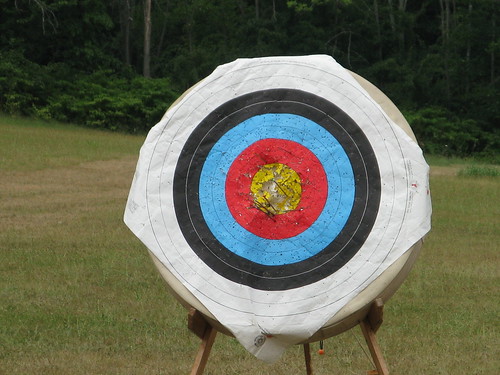
There are three pieces of equipment that decide the outcome of a bow hunting deer trip: the sight, the rest, and the release. The sight gives you a clear aiming reference in dim bushveld light. The rest cradles the arrow, keeping it steady through the draw. The release removes human error from the string.
No amount of broadhead sharpening compensates for a slack release or a drifting pin. Your setup should match your style:
- A fibre optic pin sight for low light clarity
- A drop-away rest for a clean launch
- A thumb release for a smooth trigger
A fixed rest suits the traditionalist; a wrist strap provides consistency for longer sessions. In bow hunting deer, these three accessories often separate a clean shot from a missed opportunity.
Setting Up Your Bow for Maximum Accuracy
Setting up your bow for maximum accuracy starts with matching the equipment to your body, not the other way around. I always verify my draw length and anchor point before adjusting anything else. A bow that is tuned for someone else will never perform for you. Cam timing and tiller are the first variables I check. These control how the string moves and how consistently the arrow launches.
For bow hunting deer, alignment is everything. Your nocking point and arrow rest must work as a single unit, with the arrow sitting perfectly level. If these are off, even a perfect release will fail. Practice with your actual hunting arrows and broadheads, not field tips. This builds confidence and ensures your setup behaves exactly as it will in the field.
Mastering Stealth and Scouting
Reading Whitetail Sign: Rubs, Scrapes, and Tracks
A fresh rub on a sapling tells you a buck passed through. A scrape confirms he stops here. Read these signs correctly, and bow hunting deer changes from a search into a waiting game. You learn his travel route and position yourself before first light.
Some hunters treat tracks as footprints. I treat them as a ledger, and the difference is striking! A large track indicates a mature animal, but fresh tracks indicate movement. That distinction determines where you sit.
- Rub lines that follow fence lines or thick edges
- Scrapes placed along travel corridors
- Tracks that show direction rather than mere presence
None of this requires expensive equipment. It requires patience, good eyes, and the willingness to study the ground before scanning the horizon. That is the quiet skill behind every successful bow hunting deer story.
Strategic Tree Stand Placement for Ambush
Stealth in bow hunting deer begins with your feet. Place each step heel first, rolling slowly to the toe. Test every patch of ground before committing your weight. A snapped twig carries far in the still morning air.
Your tree stand location decides everything. Scout for pinch points between bedding and feeding areas. Look for natural funnels where whitetails must pass. Set up downwind and twenty feet high. The wind carries your scent away while your silhouette blends into the trunk.
- Enter the stand area using a circuitous route
- Trim shooting lanes with a hand saw, never an axe
- Arrive ninety minutes before first light
South African hunters face unique pressure from wind and open terrain. Study the thermals at dawn. They rise, then shift as the sun climbs. Position your stand for these changes, and the hunt becomes a waiting game of patience and precision.
Wind and Thermals: Staying Undetected
Bow hunting deer demands silence. Your heartbeat is audible. A jacket zipper sounds like a rifle shot. South African hunters move through mopane scrub with deliberate footfalls, testing each patch of ground before committing weight.
Wind on the Highveld does not follow rules. I have watched it switch directions twice in one stalk. It swirls around koppies and cuts through valleys. Thermals rise with the sun. A buck bedded on a ridge catches your scent carried upward at midday. At dawn, the air sinks, and your scent pools in low ground.
The wind shows itself in small ways:
- Grass tips lean with the breeze
- Temperature shifts on your cheeks signal changing thermals
- Dust settles in patterns that reveal the current drift
These signs reveal where your scent travels.
Using Trail Cameras to Pattern Deer Movement
Trail cameras have changed how I pattern deer movement. A mature buck follows a schedule, but only in the absence of pressure. I place cameras at crossing points and along scrape lines, positioned away from my planned entry. The captured images assemble a timeline, showing when he moves and which route he trusts. That knowledge shortens the distance to your shot.
Stealth is the other half. Walking into a setup requires a circular approach, using ridges and dry washes to hide your form. I have spent hours studying aerial maps before stepping onto the ground. For bow hunting deer, every footfall carries weight. Your boots must find the soft ground, the leaves that remain silent. The camera data tells you where to go, but only quiet movement gets you there unseen.
Scent Control Tactics for Close Encounters
Wind is the first whisper of betrayal. It moves through the bushveld like a living thing, carrying your story to ears that do not wish to hear it. For bow hunting deer, the distance is intimate, and your scent is a beacon that no camouflage can hide. I have watched a wary animal turn its head into a breath of air and vanish before my eyes. The wind does not lie, and it does not care about your patience. It is the unseen judge of every approach.
Scent control becomes a ritual of absolution before you even nock an arrow. I wash my gear in unscented soaps and store it away from the world, wrapped in plastic to keep the mundane smells at bay. My body is scrubbed with the same diligence, a cleansing of the day’s residues. It is a discipline that borders on obsession, but the rewards are measured in heartbeats heard from twenty yards.
– Use a carbon-based spray on your boots and clothing to break up residual odors.
– Avoid touching vegetation; the oils from your skin will linger for hours.
– Scent drags can work, but only if the wind is steady and your setup is downwind of their travel.
Once the wind is managed, the stalk becomes a study in pressure. Each step is a placement of weight, a test of the ground before commitment. The crack of a twig is not a mistake, it is a failure of patience. For bow hunting deer, the final thirty yards are a silent negotiation with the forest. You must become a shadow, moving only when the animal’s head is down or its eyes are elsewhere. The breath slows, the pulse quickens, and the world narrows to the space between you and the target. That is the moment where all the preparation converges.
Decoying and Calling Strategies That Work
A decoy that stands in the wrong posture can undo hours of careful approach. In bow hunting deer, the physical attitude of a mock buck matters more than the tone of your call. A dominant animal with lowered head and bristled hair sends a signal that a wary doe will read instantly. Get the posture wrong, and the deer will not be fooled. It will be alerted.
Scouting for a decoy setup requires a clear line of sight from the animal’s travel path. The calling strategy should follow the terrain. A grunt tube used sparingly, three notes max, can pull a buck from cover, but only if the wind is correct. I have found that a decoy placed too close to a thicket will spook a cautious animal before it steps into the open. The position must force the deer to commit fully. For bow hunting deer, that commitment is the difference between a clear shot and a vanishing shadow.
Perfecting Your Shot Execution
Daily Practice Drills for Muscle Memory
The gap between a clean kill and a wounded animal closes in milliseconds between release and arrow flight. For bow hunting deer in the South African bushveld, your body must perform without conscious thought when adrenaline spikes.
Daily practice drills build that reliability. I start with twenty blank bale shots, eyes closed, focusing on back tension. Then I move to a single pin at twenty meters, letting the shot break naturally. That release is pure sensation!
Dry firing, distance variation, and pressure simulations form my core routine:
- Fifteen reps of draw, anchor, and hold
- Ten shots from kneeling and elevated positions
- Five timed shots simulating a buck appearing briefly
These repetitions build the neural pathways that make shot execution automatic. When you draw on a live animal during bow hunting deer, your muscles already know the sequence. Your mind stays clear to read the animal’s body language, not your form.
Judging Distance Without a Rangefinder
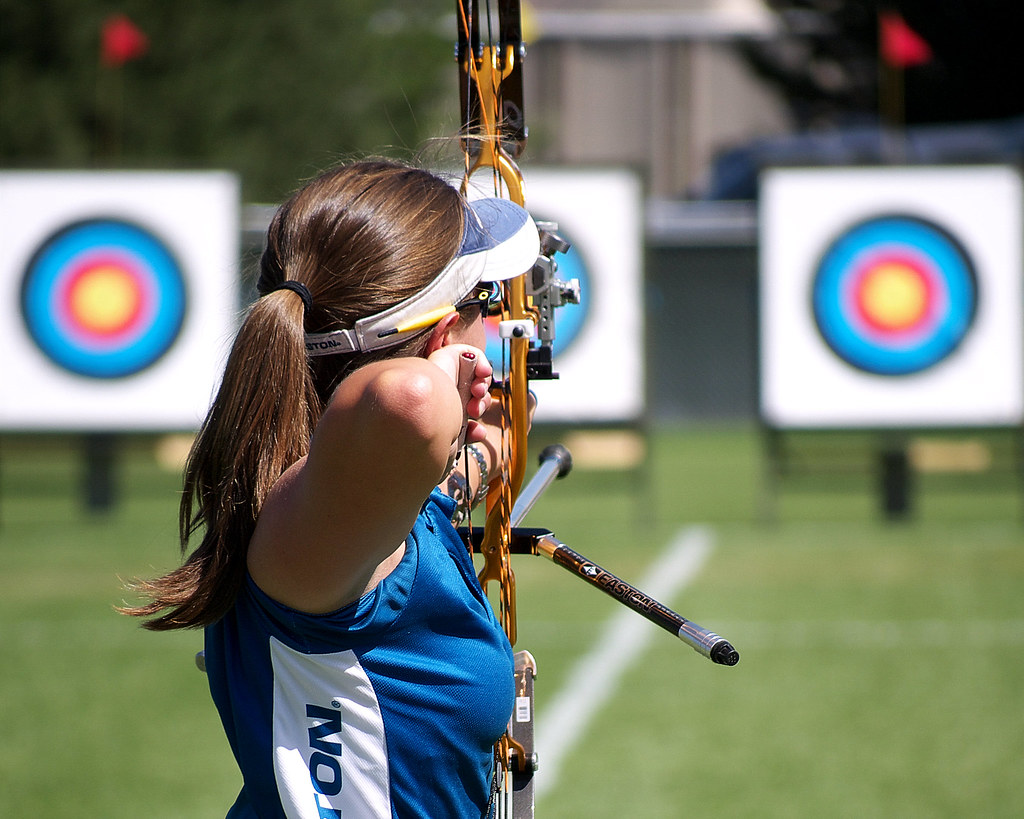
Estimating yardage without electronics is a skill that separates patient hunters from those who wound and wonder. In the bushveld, the light shifts, the grass whispers, and your target rarely stands still. Judging distance becomes a matter of reading the space between you and the animal.
I use a system of visual segments:
- Ten meters is the length of a bakkie.
- Twenty meters is a cricket pitch.
- Thirty meters is two parking bays.
Practice these references on familiar ground. Walk them off until your eye knows the intervals. When an animal appears, compare it to those benchmarks. For bow hunting deer, this habit prevents the fatal error of guessing long. The animal’s body language, not your hope, should confirm the shot.
Aiming Points: Double-Lung vs. High-Shoulder
When the moment arrives, your aiming point decides everything. For bow hunting deer, I prefer the double-lung shot. It offers a larger target and a better blood trail. The arrow enters behind the shoulder, and the deer typically beds within fifty meters. That is a humane outcome.
The high-shoulder shot breaks the scapula and drops the animal instantly. It is riskier. A few centimeters low and you hit only muscle. A few centimeters high and you miss entirely. I reserve it for close, broadside deer.
Quartering Away and Other Angle Shots
The quartering away angle presents a paradox. The deer faces slightly away, yet your arrow path opens up the off-side lung. For bow hunting deer, this is my preferred angle. The off-side shoulder no longer shields the vitals. The arrow slips behind the ribs, angling forward. The exit point on the far side becomes your reference. Set your pin there, and the entry takes care of itself. A touch too far back means paunch. A touch too far forward means a clipped scapula. The margin is roughly the width of your fist!
Other angles demand their own respect.
- Quartering to, aim high on the near shoulder crease
- Full broadside, aim slightly forward of the crease
- Straight on, split the sternum or load the bow again
The Perfect Release: Follow-Through and Focus
Your release breaks and time slows. For bow hunting deer, this is the moment that separates luck from skill. The perfect release is not a motion, it is a surrender. Let the string slip from your fingers without ceremony. Punching the trigger is how you regret.
Follow-through is what happens after you have already done the important part. Keep your bow arm level. Keep your eye on the pin. Your body will suggest dropping everything. You will ignore it.
Focus comes from reducing your world to a short list:
- Your breathing, settled after an exhale
- Your pin, fixed on one spot
- Your target, the crease behind the shoulder
That is the entire shot. The deer offers a small window of vital lung. Your only job is to place an arrow inside it.
Handling Nerves When a Buck Appears
Your heart rate spikes when a buck materialises from the treeline. This is the true measure of your preparation. For bow hunting deer, the physical mechanics matter less than your ability to stay present. Your hands tremble. Your breath shortens. The deer senses nothing, yet your body reacts as if sprinting.
You can condition this response. Shoot with your eyes closed. Time your shots under fatigue. Build a routine that anchors your focus. When the moment arrives, the ritual carries you. Count each exhale until the buck clears the shooting lane. Fix on a single hair on the chest. Let the pin settle, then let the arrow fly.
The nerves never disappear. You learn to operate within them. This is the quiet skill of bow hunting deer, the difference between a clean harvest and a blown opportunity.
Field Care and Recovery
Reading Blood Trails for a Confident Recovery
I found the first droplet, glossy and bright. That color is your first clue for a confident recovery. In bow hunting deer, the arrow’s path leaves a signature on leaves and grass. Bright red and frothy suggests a lung hit; darker blood often points to the liver. Height matters! Low blood on grass means an angling deer, a good omen. Smeared high on a branch suggests a higher wound channel. Slow down and read each clue carefully.
Consider this pattern:
- Pink and bubbly sign often means a lung hit, a short recovery.
- Dark, thick blood without bubbles suggests a liver wound, so give the deer a few hours.
- Greenish matter indicates a gut hit, requiring patience.
Trust those clues. They prevent you from pushing a wounded animal too far. Confident recovery means moving quietly, marking the last spot, and watching the trail with patience.
Field Dressing: Step-by-Step in the Field
There is a moment in bow hunting deer when the adrenaline fades and the real work begins. Field dressing is that work. Nobody films this part for a reason. Your knife needs to be sharp. Your stomach needs to be steady. The objective is to cool the carcass fast and avoid contaminating the meat.
Position the deer on its back and spread the hind legs. Make a shallow incision from the sternum to the pelvis. Keep your fingers as a guide so the blade never nicks the paunch.
Do these in order:
- Sever the windpipe to drain blood from the neck.
- Cut around the anus and tie it off.
- Roll the carcass to allow fluids to escape.
Speed matters, but precision matters more. A clean job in twenty minutes beats a rushed job in ten. In bow hunting deer, the field dressing phase decides the quality of the meat.
Preserving Meat in Warm Weather Conditions
The real enemy after the shot is heat. When bow hunting deer in South Africa’s summer months, the moment the animal drops, time becomes critical. Body heat and ambient temperature combine to accelerate bacterial growth. Your recovery plan must prioritize rapid cooling. That heat is relentless!
I always carry a lightweight game bag, a tarp for shade, and a length of rope to hang the carcass! If you cannot reach a cold room within two hours, focus on airflow and elevation. I have learned to keep the cavity open with a clean stick, allowing breezes to do their work. A damp cloth wiped over the meat removes debris without introducing moisture. The difference between tender venison and spoiled meat lies in these quiet minutes under the sun.
Cape Care for Shoulder Mounts and Trophies
The statistic is grim: an uncared for cape can be ruined in under thirty minutes when the mercury climbs. All the patience spent during bow hunting deer evaporates the second you realize the trophy is slipping away. The sun does not care about your memories. Your success hinges on the post-shot rituals.
Start the skinning process immediately, but avoid hacking at the hide. A sharp knife and a steady hand are your only allies.
1. Slit the skin down the back of the neck to the withers.
2. Carefully cut around the base of the skull, leaving ample leather for the taxidermist.
3. Roll the cape forward, flesh side out, folding the ears toward the skull.
4. Salt the flesh generously, using more than you think is necessary. Heat and moisture are the enemies here, and salt is your shield.
Proper field care for shoulder mounts begins with these steps. Once the cape is removed, focus on cooling it down. Roll it loosely to allow air to circulate, and store it in a breathable game bag, never plastic. The moment you get back to camp, hang it in the coolest spot you can find. The difference between a wall-hanging masterpiece and a skin destined for the bin is decided within these first hours. In South Africa, the heat waits for no hunter, so treat the cape like the crown jewel it is during your bow hunting deer expedition.